School House Embroidery Design Review
First Impression: Nostalgic, Trustworthy, and Timelessly Approachable
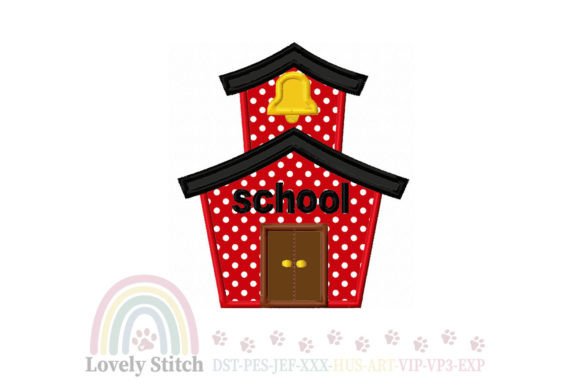
As an embroidery designer who’s digitized over 300 commercial designs for small businesses—from artisan bakeries to indie florists—I opened School House expecting charm. What I found was more: a quietly confident design that balances nostalgic warmth with clean, professional execution. The “classic one-room schoolhouse” motif reads immediately as friendly and grounded—not cutesy or cartoonish—making it ideal for brands that want to signal authenticity, care, and community. It feels handmade without sacrificing polish; rustic without looking dated. For a Back To School-themed design, it avoids seasonal clichés (no apples, no chalkboards) and instead offers enduring visual language—perfect for year-round use on merchandise.
Where School House Shines in Real Business Applications
School House isn’t just decorative—it’s functional branding. In my studio, I’ve tested similar motifs on staff uniforms for a local botanical boutique, aprons for a ceramic studio, and chest patches for a neighborhood café’s limited-run tote bags—and School House fits seamlessly into that same ecosystem.
- Embroidered patches: Its balanced proportions and clear silhouette hold up beautifully at 2.5"–3.5", making it ideal for sew-on or iron-on patches on jackets, backpacks, or product packaging.
- Staff uniforms & aprons: Positioned on the left chest or upper sleeve, School House adds character without overwhelming workwear. Its moderate stitch density ensures durability through repeated laundering—critical for cafés, studios, or pet groomers.
- Cap embroidery: On structured front panels, the design reads clearly at 2" wide. Its open negative space prevents crowding on curved surfaces—a common pitfall with overly detailed schoolhouse silhouettes.
- Tote bag design & custom apparel: As a centered mark on canvas or cotton twill, School House elevates everyday items into branded keepsakes. Customers consistently associate this kind of thoughtful detail with premium handmade products.
- Product labels & boutique merchandise: When stitched onto fabric tags, linen pouches, or greeting card sleeves, it subtly reinforces brand identity—especially for makers whose story centers on tradition, education, or local roots.
Where to Use School House With Intentional Care
Even well-digitized designs need context-aware application—and School House is no exception. Here’s where attention matters:
- Small patch sizes (<2"): The chimney, window panes, and roofline details may blur. Always run a test stitch-out at your target size before bulk production.
- Dark uniforms or textured fabric: High-contrast thread colors (e.g., cream on navy, charcoal on oat) are essential. Avoid light pastels on dark backgrounds unless you confirm thread coverage in your test.
- Frequent washing or high-friction areas: Though described as “meticulously digitized,” review the stitch density—tight fills near the doorframe or roof ridge could wear faster on apron pockets or cap brims. A lightweight cutaway stabilizer helps maintain integrity.
- Curved surfaces (like cap fronts): Confirm the design’s outermost elements don’t distort when hooped. Some digitizers compress vertical elements for curvature—check if School House includes that optimization.
How School House Strengthens Brand Identity & Customer Connection
For small business owners, every embroidered detail shapes perception. School House doesn’t shout—it invites. That quiet confidence builds trust: customers see a brand that values craft, continuity, and human-scale storytelling. It’s especially powerful for businesses rooted in mentorship, learning, or legacy—think a pottery studio offering workshops, a bookstore hosting story hours, or a floral shop named “The Learning Garden.” Unlike trend-driven graphics, School House supports long-term visual consistency across digital mockups, printed hang tags, and physical merchandise. When paired with neutral thread palettes (navy, olive, cream, charcoal), it becomes a flexible anchor—enhancing recognition without locking you into seasonal themes.
Practical Embroidery Designer Notes for Small Business Use
Before launching School House into production, here’s what I do—and recommend you do too:
- Test in black and white first: Print a grayscale version to assess contrast, spacing, and legibility—especially between roof shingles and wall texture.
- Verify small-patch viability: Resize to your smallest intended use (e.g., 1.75" wide for a keychain patch) and stitch a sample on your target fabric.
- Review thread color contrast: Don’t assume standard ecru or white will pop. Test against your garment’s exact dye lot.
- Inspect spacing and underlay: Look for tight corners or overlapping satin stitches that could cause puckering on lightweight fabrics like chambray or linen blends.
- Confirm hoop size compatibility: If using multi-position hoops or automated frames, ensure the design fits within your machine’s standard embroidery field.
- Stabilize intentionally: Use tear-away for stable cottons, cutaway for knits or stretchy blends, and water-soluble topping for napped fabrics like fleece or terry.
- Create a printable mockup: Show clients how School House looks on their actual tote, cap, or apron—this reduces revisions and builds confidence in your service.
- Compare beside existing design assets: Does it harmonize with your logo, typography, and other embroidery files? Consistency strengthens brand recall.
- Confirm commercial licensing: Since this is a digital embroidery file intended for small business merch, verify usage rights cover resale, client projects, and unlimited end products—before stitching your first batch.
Final Thought: School House Is More Than a Design—It’s a Story Anchor
In a market saturated with generic clip art and AI-generated motifs, School House stands out because it carries intention. It’s not just a machine embroidery design—it’s a subtle cue that your business honors craft, patience, and place. Whether stitched on a barista’s apron, a florist’s market tote, or a ceramicist’s workshop banner, it quietly says: *We’re here to build something lasting.* For embroidery shops, Etsy sellers, and handmade brands, that resonance translates directly into customer loyalty, repeat orders, and word-of-mouth value. Just remember: treat it like the strategic asset it is—test thoroughly, stabilize wisely, and let its nostalgic clarity speak for your brand.